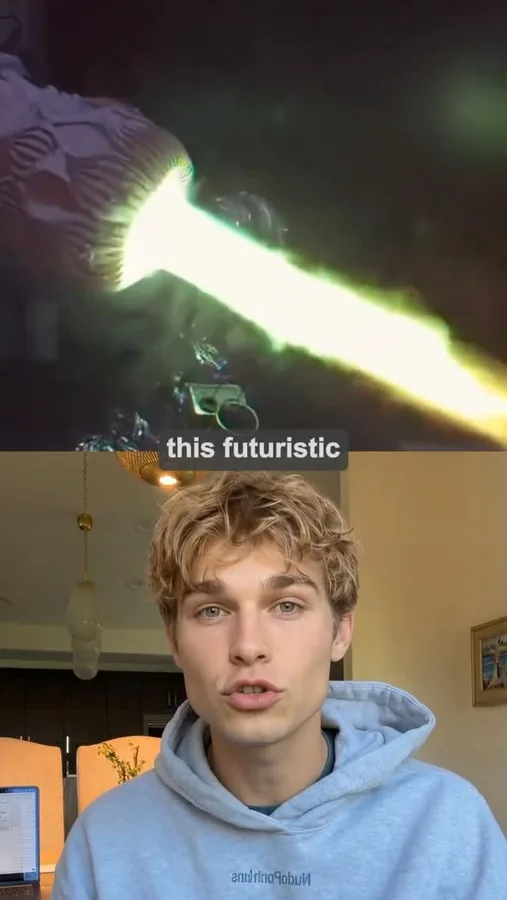

AI avatars win short-video platforms using the exact same format as human creators: a talking head with b-roll inserts. The performance is identical — audiences and algorithms can't tell the difference — but the economics are inverted. Instead of renting a creator's attention, you own the account, the audience and the data. Across three platforms with fundamentally different algorithms, one strategy dominates: 60 videos per month, two per day, and a format that reads as human because it is.
TikTok, Instagram Reels and YouTube Shorts are not the same algorithm, but they all reward the same content format: a person speaking to camera, cut with supporting visuals. The talking head works because it creates connection, allows information to be delivered verbally and visually at once, and reads as authentic. On any short-video platform, it is the most scalable and repeatable format.
An AI avatar in talking-head format performs identically to a human creator. Viewers see a consistent face, a clear niche and a posting rhythm they can trust. The avatar's gender, age, ethnicity and language can be tailored to the target audience, but the mechanism is the same: face, voice, format, consistency.
For production at scale, the talking-head format is mandatory. The avatar's performance is consistent (same lighting, same camera angles, same facial expressions), and the b-roll library is reusable across videos. A faceless voiceover format is cheaper to produce but performs lower because it doesn't build a persona; a pure graphics-and-text format is even cheaper but scales reach much slower. The brands winning short video own a talking head, whether human or AI.
Short-video platforms are feed-based, not subscription-based. You don't have subscribers checking your page; you have algorithmic distribution feeding your new videos to relevant viewers. To maintain momentum in that system, consistency is the only metric that matters. Algorithms trust accounts that publish regularly. Audiences notice patterns and return for them.
The benchmark cadence is two videos per day. This is the production throughput that maintains platform algorithm trust without overwhelming your production capacity. Our fleet of 300+ active accounts runs on a 2-per-day schedule. It provides enough fresh content to capture multiple algorithmic feed cycles (TikTok and Reels run multiple feed rotations daily) while keeping manual editing quality high.
One video per day looks quiet to algorithms. Three or more per day becomes unsustainable for hand-edited content and starts to look like spam to viewers. Two videos per day is where volume meets quality.
The three platforms have the same format but different algorithm incentives. Understanding each one is the difference between steady growth and stalled momentum.
TikTok is the most creator-friendly platform. It rewards watch time, completion rate and re-watches. The algorithm surfaces new accounts faster than Reels or Shorts, which means ramp-up can happen in weeks, not months. TikTok also allows for longer content (up to 10 minutes), though the short-form sweet spot is 30–60 seconds. A niche-specific avatar with consistent content can hit significant reach within 3–4 weeks on TikTok.
Instagram Reels operate on a friendship and follow graph. You get reach first to people who follow you or follow people who engage with you, then to broader audiences. Ramp-up is slower than TikTok (4–8 weeks to significant reach), but engagement rates are higher because Reels viewers are often already interested in the niche. Reels also favor shares and saves, not just watch time, so content that feels actionable or surprising performs best.
YouTube Shorts sit inside the YouTube ecosystem, where subscription and recommendation matter. A Shorts channel attached to a established YouTube channel will grow faster. Standing alone, Shorts growth is slowest of the three (6–12 weeks to momentum). But Shorts link to longer YouTube videos, creating a natural funnel from short-form discovery to long-form monetization.
The same avatar can post the same content on all three platforms, but the best operators slightly adapt pacing and hook placement for each one. TikTok gets the full 60 seconds; Reels might be 30 seconds with more emphasizes on shares; Shorts might be 45 seconds with YouTube linking in the description.
AI avatar growth is not linear. It follows a predictable ramp that all accounts experience regardless of niche or platform, because it's determined by algorithm trust, not content quality.
Months 1–3: The ramp-up phase. The account is new; algorithms are cautious. Expect slow growth, low reach per video and low engagement rates. Your first 100 followers will come from network seeding and platform exploration, not viral reach. This phase is psychologically the hardest because you are producing consistently with minimal visible return. This is where most creators quit. AI avatars don't; they keep posting.
Months 4–6: Momentum phase. Algorithms have seen enough data to make a judgment. If your content is niche-specific and consistent, the algorithm trusts you. This is where reach compounds. Videos that would get 5K views in month 2 now get 50K+ views. Your growth curve visibly inflects. Engagement rates improve. This phase is the confirmation that the strategy is working.
Months 7–12: Asset phase. The account is now a long-lived media asset with compounding reach. You're no longer fighting algorithm indifference; you're managing algorithm momentum. Each new video has a baseline reach simply from being new content from an account the platform trusts. Organic reach compounds further when you introduce monetization (recommendations, placements, product reviews) because the audience is ready to engage with native commercial content.
Our fleet of 300+ active accounts, publishing 18,000+ videos monthly across all three platforms, passed 800M total reach in five months. That's the result of accounts reaching different phases of the ramp simultaneously. The newest accounts are in ramp-up; the mature ones are in asset phase. Taken together, the fleet compounds.
We published a full case study on @ai.honeycove, an AI avatar account we operated for the luxury market. The results show what the format and cadence can do in practice.
The account reached 118.1K followers generating 27.03M total views and a 2.78% engagement rate, posting two videos per day using the talking-head format. The breakdown per platform: TikTok dominated with the fastest ramp; Reels provided steady, high-engagement growth; Shorts captured YouTube audiences. The average view per video was 53.5K, achieved through consistent format, daily posting and algorithm momentum in months 4–12.
This is not the ceiling. This is one account in one niche. The methodology scales across niches because the format works across niches. Consistency, cadence and format compound regardless of whether you're building a luxury avatar, a tech educator or a wellness creator.
The math of short-video economics has inverted. A sponsored post from a human influencer costs $5K to $100K+, buys one-time exposure and reaches an audience you don't own. The same budget applied to an owned AI avatar account compounds: every video grows an audience that stays attached to your brand, in perpetuity.
An AI avatar is the inverse of creator risk. A human creator can leave, get canceled, shift their values or simply burnout. An AI persona can't; it's a system under your control. The face, the voice, the content, the audience and the data all stay with you. Platform algorithms also favor accounts that stay consistent. An AI avatar never changes lanes or gets distracted.
The core format is identical: talking head plus b-roll, edited by hand. But each platform has different algorithm incentives. TikTok rewards consistency and watch time; Reels favor discovery and shares; Shorts prioritize completion rate. The same avatar content can be adapted per platform, and the best performers optimize for each one's specific rhythm and pacing.
Two videos per day is the benchmark cadence. This provides enough fresh content to feed algorithm feeds without overwhelming your publishing capacity. Across our fleet of 300+ active accounts, 2/day is the standard that maintains momentum while keeping production quality high.
Growth is not linear. Months 1–3 are ramp-up; expect slow growth as platforms learn the account. Months 4–6 is momentum phase; algorithms start trusting consistent content. Months 7–12 the account becomes a long-lived media asset with compounding reach. We benchmark at 800M total reach across our 300+ accounts; your results will vary by niche, competition and consistency.
Yes, empirically. The talking head is the format human creators use because it works. It creates connection, allows clear communication, and reads as authentic. Cut with b-roll, it performs as well on short-video platforms as any other format, and it's the most scalable for production systems because the avatar performance is consistent and the b-roll library is reusable.