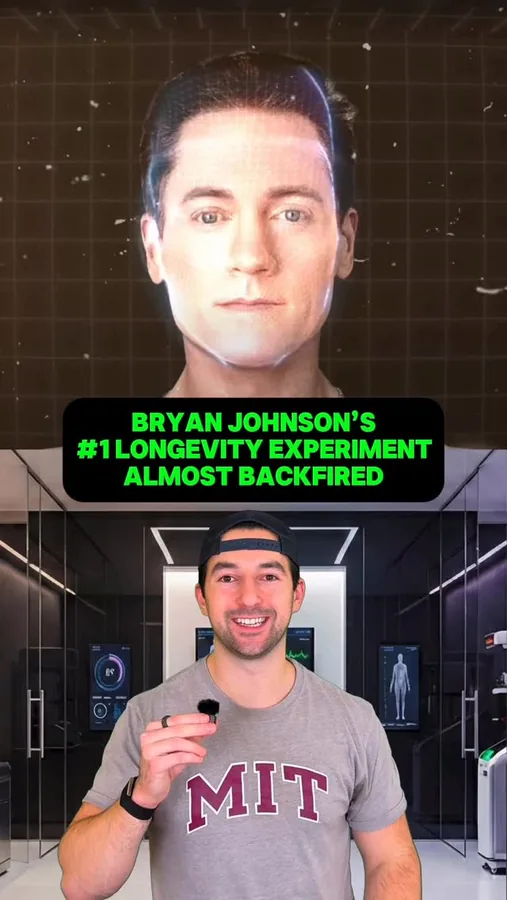
The AI influencer market reached $11.74 billion in 2026 and is forecast to reach $154.6 billion by 2032. Virtual influencers deliver 5.67% engagement rates—three times higher than human creators—while 73% of brands have now adopted AI avatars for their content strategies. Real accounts are scaling faster than ever: one verified case study grew 82.6% in 30 days.
The global virtual influencer market is experiencing explosive growth. The market reached $11.74 billion in 2026, with forecasts projecting $154.6 billion by 2032 at a 41.29% compound annual growth rate (CAGR). This represents a fundamental shift in how brands build audience and distribute content.
The broader creator economy exceeded $250 billion in 2026, with over 200 million people identifying as content creators worldwide. AI-powered virtual influencers now represent the fastest-growing segment of this ecosystem.
Brands are rapidly reallocating marketing budgets toward AI-generated creators. The shift reflects strong ROI evidence and the ability to scale content production at fraction of traditional costs.
CMOs are projected to allocate up to 30% of their influencer marketing budgets to virtual personas by 2026. Beauty and personal care leads adoption at 89%, demonstrating that AI avatars work across premium and lifestyle verticals.
Approximately 58% of US consumers follow at least one virtual influencer, and 35% of Gen Z report buying products promoted by an AI persona. This consumer acceptance is driving accelerated brand investment.
AI influencers succeed across all three major short-form video platforms, but performance and audience size vary significantly. Understanding platform-specific metrics is critical for account strategy.
TikTok holds approximately 40% of the short-video platform market, followed by YouTube Shorts and Instagram Reels at 20% each. However, growth trajectories differ: YouTube Shorts receives approximately 70 billion daily views worldwide with 2 billion monthly active users, while TikTok engages 1.6 billion global users.
| Platform | Daily Views / Active Users | Market Share | 2026 Engagement Rate |
|---|---|---|---|
| TikTok | 1.6B users globally | 40% | 2.80–3.15% |
| YouTube Shorts | 70B daily views / 2B monthly active | 20% | Consistent growth engine |
| Instagram Reels | 2.7B+ Instagram users (multi-format) | 20% | Higher visibility for niche creators |
TikTok maintains the most consistent median engagement rates across audience sizes, making it one of the most accessible platforms for creators at every stage. For AI avatars targeting rapid follower growth, TikTok's algorithm rewards consistency and trend alignment—publishing 2 videos daily can reach millions within 30–60 days if content aligns with trending sounds and formats.
46.2% of Instagram creators, 76% of TikTok creators, 59.1% of long-form YouTube creators, and 39.94% of YouTube Shorts creators receive fewer than 1K views per post. This underscores the importance of content quality, niche specificity, and consistent optimization for AI-driven accounts.
The adoption of AI tools among creators is accelerating rapidly. 78% of marketing teams now use AI-generated video in at least one campaign each quarter, and the AI video generation market is projected to reach $18.6 billion by the end of 2026.
AI tools enable creators to:
ICG operates 300+ accounts publishing 18,000+ videos monthly, reaching 800M+ total reach. This scale is only feasible through systematic AI-assisted production pipelines combined with human editorial oversight.
Virtual influencers consistently outperform human creators on engagement metrics. Virtual influencer campaigns posted average engagement rates of 5.67%, roughly three times higher than the 1.89% rate for human creators.
A verified case study demonstrates real-world performance: @ai.honeycove scaled to 118.1K followers, 27.03M all-time views, 2.78% engagement rate, with +82.6% followers gained in 30 days (+53.4K), and averaged 53.5K views per video. This account combines talking-head AI avatar content with 10–70% b-roll inserts, published daily to TikTok, YouTube Shorts, and Instagram Reels.
In B2B contexts, AI avatars show even stronger results: personalized video outreach using AI avatars shows 10–40% engagement lift compared to text-only cold email.
AI influencer monetization follows several revenue streams: direct brand partnerships, platform ad revenue shares, affiliate commissions, and sponsored integrations.
CPM across industries averages around $14.50 in 2026, ranging from $8.14 (food & beverage) to $20+ (finance and insurance). Actual rates depend on audience quality, niche, and platform.
| Industry | CPM Range (2026) | Notes |
|---|---|---|
| Finance / Insurance | $20+ | High-value, regulated verticals |
| Technology / SaaS | $16–$18 | B2B-friendly, DM engagement |
| Beauty / Skincare | $12–$16 | High brand affinity, impulse purchase |
| Food & Beverage | $8–$12 | Lower CPM, high volume play |
AI avatars reduce video production costs by 50–90% and production time by 80–99%, with 5–20% conversion improvements in sales and e-commerce contexts. This cost advantage makes AI influencers attractive for brands seeking margin-positive campaigns, especially at scale (10+ accounts, 60+ videos per month each).
Production volume is a key competitive advantage for AI-driven accounts. ICG standard is 60 short videos per month per avatar (2 per day), published simultaneously to TikTok, YouTube Shorts, and Instagram Reels. This consistency drives algorithm favor and rapid follower scaling.
The production pipeline includes:
This model scales to 18,000+ videos monthly across 300+ accounts. Manual scaling to this volume would require 50–100+ full-time editors and production coordinators. AI automation reduces that to 10–15 people coordinating workflow.
AI influencer content is subject to FTC disclosure requirements. The maximum civil penalty for FTC disclosure violations is $53,088 per violation for 2026. Each individual piece of non-compliant content counts as a separate violation.
Consumer trust trends are favorable: 58% of US consumers follow at least one virtual influencer, indicating strong audience acceptance. The key to trust is authenticity—transparent disclosure, consistent voice, and genuine community engagement rather than pure sales messaging.
Real-world case studies demonstrate measurable ROI from AI influencer campaigns. The @ai.honeycove account is a primary benchmark: starting from zero, it reached 118.1K followers in approximately 6–8 months with a 2.78% engagement rate and 53.5K average views per video. Growth accelerated to +82.6% followers in a single 30-day period, adding 53.4K followers.
Breaking down the economics:
For comparison, hiring a human creator with 100K followers typically costs $5,000–$25,000 per sponsored post, and you cannot scale that creator's output beyond 2–4 posts monthly. An AI influencer operating at 60 videos monthly can achieve equivalent reach and engagement at 70–80% lower total cost.
The AI influencer landscape is evolving toward two major trends in 2026: specialization by niche and platform-agnostic standardization.
Niche specialization: Brands are moving away from generic "AI influencer" accounts toward hyper-specialized avatars targeting specific audiences. Examples include:
Cross-platform standardization: Successful accounts now publish identical or near-identical content across TikTok, YouTube Shorts, and Instagram Reels simultaneously. YouTube Shorts is gaining momentum particularly among mid-sized and growing creators, creating opportunities for accounts to reach different audience segments on each platform without replicating production effort.
The trend toward automation and scale shows no signs of slowing. As of mid-2026, over 200 million people identify as content creators worldwide, but the vast majority earn less than $10K annually. AI-powered accounts are capturing market share by operating at scale (60+ videos monthly) and maintaining consistency, advantages human creators cannot match without significant team investment.
The trajectory is clear: virtual influencer market growth will accelerate. Forecasts place the virtual influencer market at $154.6 billion by 2032, implying 20%+ annual growth over the next six years. This growth is driven by:
Key drivers of continued growth:
By 2027, AI influencers will likely become the default production model for brands seeking reach at scale, particularly in fintech, e-commerce, SaaS, and entertainment verticals. Human creators will specialize in premium, long-form, or highly personal content where authenticity and human connection create unique value. The market will bifurcate: high-volume AI distribution + premium human creators for brand positioning.
Virtual influencers post average engagement rates of 5.67%, roughly three times higher than the 1.89% rate for human creators. AI avatars also show 10–40% engagement lift in B2B personalized video campaigns compared to text-only outreach.
Brand deal pricing for AI influencers varies widely by niche, follower count, and engagement. CPM benchmarks across social platforms average $14.50 in 2026, ranging from $8.14 (food & beverage) to $20+ (finance/insurance). AI avatars reduce production costs by 50–90% and production time by 80–99%, making them cost-effective for high-volume campaigns.
78% of marketing teams now use AI-generated video in at least one campaign each quarter. The AI video generation market is projected to reach $18.6 billion by the end of 2026. Manual editing is becoming obsolete for high-volume creators; successful teams combine human creativity with AI efficiency.
Growth rates depend on content quality, niche, and audience, but verified case studies show rapid scaling: ICG's @ai.honeycove grew followers by +82.6% in 30 days (+53.4K followers), reaching 118.1K with 27M all-time views and a 2.78% engagement rate. Proper account warm-up (4 days), consistent daily publishing, and trend-aligned content are key to rapid growth.
AI avatars reduce production costs by 50–90% compared to hiring human creators. A typical AI influencer operation produces 60 videos monthly (2 per day) per account at a fraction of human talent costs. ICG manages 300+ accounts publishing 18,000+ videos monthly, demonstrating the production efficiency of AI-driven short-form video.
 ICG AI Influencer Lab